
Listen Now


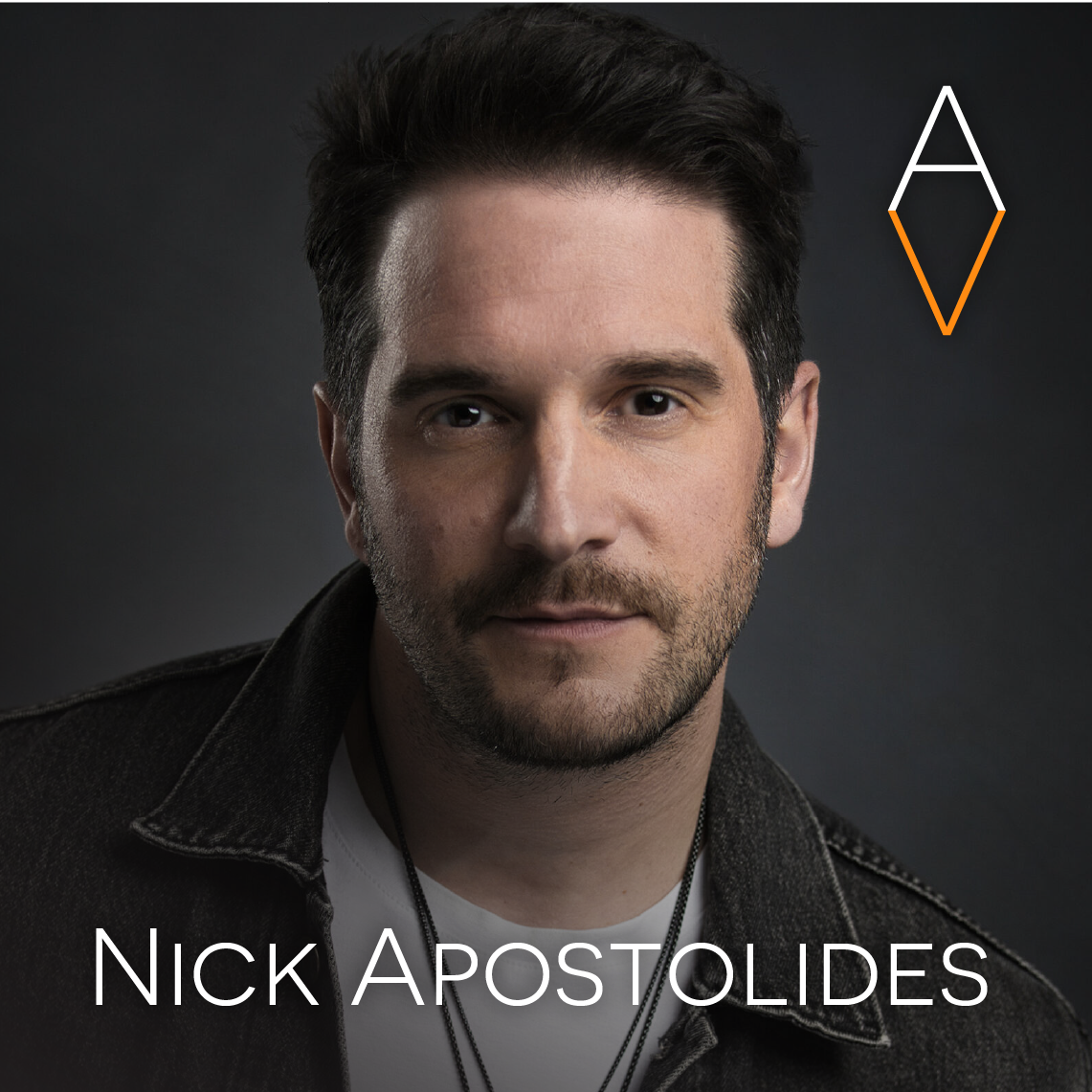


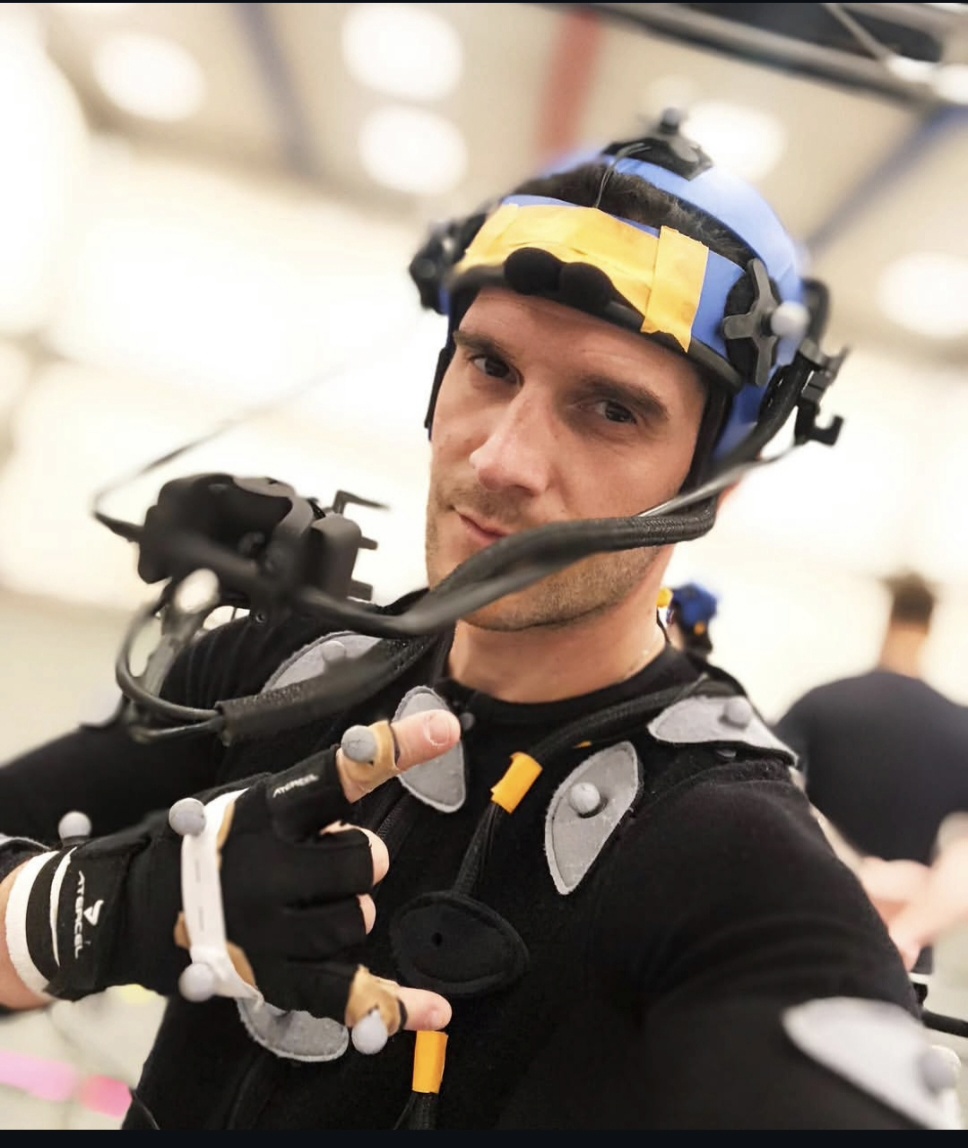
Nick Apostolides was born in Salem, Massachusetts, and was a builder long before he was a performer. Legos and Lincoln Logs were his first hobby, and with a father who built for a living, Nick spent his childhood making things with his hands, wanting to be someone who designed houses when he grew up. Little did he know that his favorite movies, like Indiana Jones and Die Hard, lit a quieter dream of being an action star, but he never chased it, and acting simply never occurred to him as an option. He instead, moved through six or seven different industries before landing as an executive concierge at a four-star hotel in Boston, rubbing elbows with business travelers and regulars, a job he genuinely enjoyed. It was there that the nudge to act came. Dozens of times, guests asked him the same thing: "Are you an actor?". Nick had a philosophy that if more than three strangers tell you something then that's the universe nudging you in a direction and that was his sign to give it a shot. Boston, a college town thick with film programs and student films, gave him somewhere to test the idea, so at twenty-five he started auditioning and began booking lead roles right away.. He stayed in the local market for three years, auditioning for and booking dozens of independent films, music videos, commercials, and hosting gigs, which taught him exactly what he was and was not on camera. The limited resources of low budget films even taught him to do his own stunts and to handle a firearm safely, skills he would carry with him. But a sustainable career was hard to build in a small town, and eventually he told himself the only serious next step was to go where the big boys were, and he set his sights on Los Angeles.
"Trust your instincts. It's stuff that we can't even understand. We can't put it in words. But if you get that feeling, that inkling, you want to do something, do it."
.webp)
Nick landed in Los Angeles at the end of 2018 with confidence, demo reels, and a realist's read on the odds, and he started booking commercials right away. He had also made an unofficial contract with himself before he left: no side jobs, at least one year as nothing but an actor, and an expectation that he would hit rock bottom at least twice. He did, owing more than he had in the bank and refusing to ask anyone for money, convinced the dues were part of the package. Video games had already been quietly seeded years earlier by America Young, an actress he met on an independent fan film, who explained that she did body movement for games like Call of Duty; a light went on, because he had been playing since 1989 and had never once considered it a viable path for an actor. Her leads got no traction, but then a casting call for a triple A lead appeared that he was certain was Resident Evil. It was the first video game audition he ever submitted. He drilled firearms and tactical movement with his friend James, worked physical gestures with theater actor Darren Bailey, lost eight pounds living at the gym, and walked in carrying eighteen years of love for the franchise and the belief that nobody auditioning knew it better. He booked it a couple of months after that all time low, and it changed his trajectory. Playing Leon S. Kennedy meant filling shoes he had worshipped; Paul Mercier's 2005 performance was one of the reasons he wanted to act in the first place, and all Nick wanted was to do the character justice. Capcom told him they had cast him because they saw a young Leon in him, and to stop copying and just inject his own personality. Performance director Tom Keegan finished the job, stripping the zombie apocalypse out of every scene and asking what would Nick do, until the honesty came out on its own. His first game was also his first voiceover work, and he committed to it hard enough that while recording death screams with his own hands around his throat, he passed out cold against the back of the booth; Capcom loved the take so much they put it in the game. Resident Evil 2 wrapped in 2018, and three years later they came back for Resident Evil 4, the game that had been his favorite for sixteen years and which he had beaten fifty times. By then the trust was total. He wrote, worked closely with the director and the localization director, and helped shape the older, more cowboy version of Leon he had wanted from the start. Both games were nominated for Game of the Year. The character carried him further, into the Netflix series Infinite Darkness in Japan, where a stunt team finally let the self-described stunt capable actor do his own work, and into the meat puppet days of games like Medal of Honor, where he played roughly a thousand Nazis. Then a different kind of opportunity fell in his lap and he took it, stepping away from the volume for much of four years to shoot 31 episodes of a building program around the world, partnering with nonprofits on community projects that had to improve many thousands of lives. He calls it the most fulfilling work he has ever done.
"What I'm so thankful for is the fact that our creative work, like our life's work, actually does have an impact on these young kids."

Nowadays, the thing Nick is chasing is not another credit, it is balance. Somewhere between 800 and 1,000 flights since 2018, thirty-something trips out of a fifty-two week year, and he is candid about the toll: he gives everything he has to whatever room he is standing in, and by the time he gets home there is nothing left over for himself. He wants to move from seventy-thirty back toward fifty-fifty, and he names that as his goal every year. What steadies him is a small set of ideas he actually lives by. Wabi-sabi, the Japanese notion of finding beauty in the impermanence of things, which he boils down to appreciating a moment while you have it, the same lesson as the Spanish quote he had translated off a bakery wall in Honduras: don't cry because it ended, smile because it happened. Optimism as a permanent filter, silver linings pried out of even the bad days. Being real rather than networking, because people hire the person they would have a beer with. And trusting your instincts, since "leap and the net will appear" is the only reason he is here at all. Conventions taught him the rest. When a young fan tells him that meeting him was the highlight of their year, he hears the compliment and the ache in it at the same time, and it is why he will not let anyone say this industry is only making video games. So what he offers young people has almost nothing to do with acting: find your flame, the thing you can do for sixteen hours without getting tired or hungry, and build your life around it. Asked what he would tell his younger self, he said he would not say a damn thing. He would just hand the kid an Oreo. And when his body finally calls it, the plan is already made: an ice cream parlor, flavors of his own invention, because nobody has ever stood in line for ice cream unhappy.
"I believe that the Oreo cookie is the perfect cookie. Perfect blend of cookie and innards. And during the pandemic, a lot of people don't know this about me, but I ate about 1400 Oreos."
Learn how Nick Apostolides (PCAP & VO Actor) went from a Boston concierge to voicing and performing Leon Kennedy in Resident Evil 2 and 4. Hear how a lifelong love of the franchise since 1998 and total commitment to truth, once passing out in the booth, shaped his take on a gaming icon.
Learn how Nick Apostolides (PCAP & VO Actor) went from a Boston concierge to voicing and performing Leon Kennedy in Resident Evil 2 and 4. Hear how a lifelong love of the franchise since 1998 and total commitment to truth, once passing out in the booth, shaped his take on a gaming icon.

Learn how Cissy Jones (VO & PCAP Actor) left a Silicon Valley career to pursue voiceover and PCAP in games. Hear how she has evolved her career of playing grounded, powerful leaders into fighting for actors' rights against abusive AI practices and helping Congress craft bills that will help preserve the future of this industry.
Learn how Cissy Jones (VO & PCAP Actor) left a Silicon Valley career to pursue voiceover and PCAP in games. Hear how she has evolved her career of playing grounded, powerful leaders into fighting for actors' rights against abusive AI practices and helping Congress craft bills that will help preserve the future of this industry.

Learn how Jay Walker, (PCAP, Film, & TV Actor) chose his love of acting over a secure future he wasn't passionate about. Hear how this lifelong gamer, who never planned on acting in games, found his favorite performance medium in PCAP and is now the lead character in one of his all time favorite gaming franchises.
Learn how Jay Walker, (PCAP, Film, & TV Actor) chose his love of acting over a secure future he wasn't passionate about. Hear how this lifelong gamer, who never planned on acting in games, found his favorite performance medium in PCAP and is now the lead character in one of his all time favorite gaming franchises.
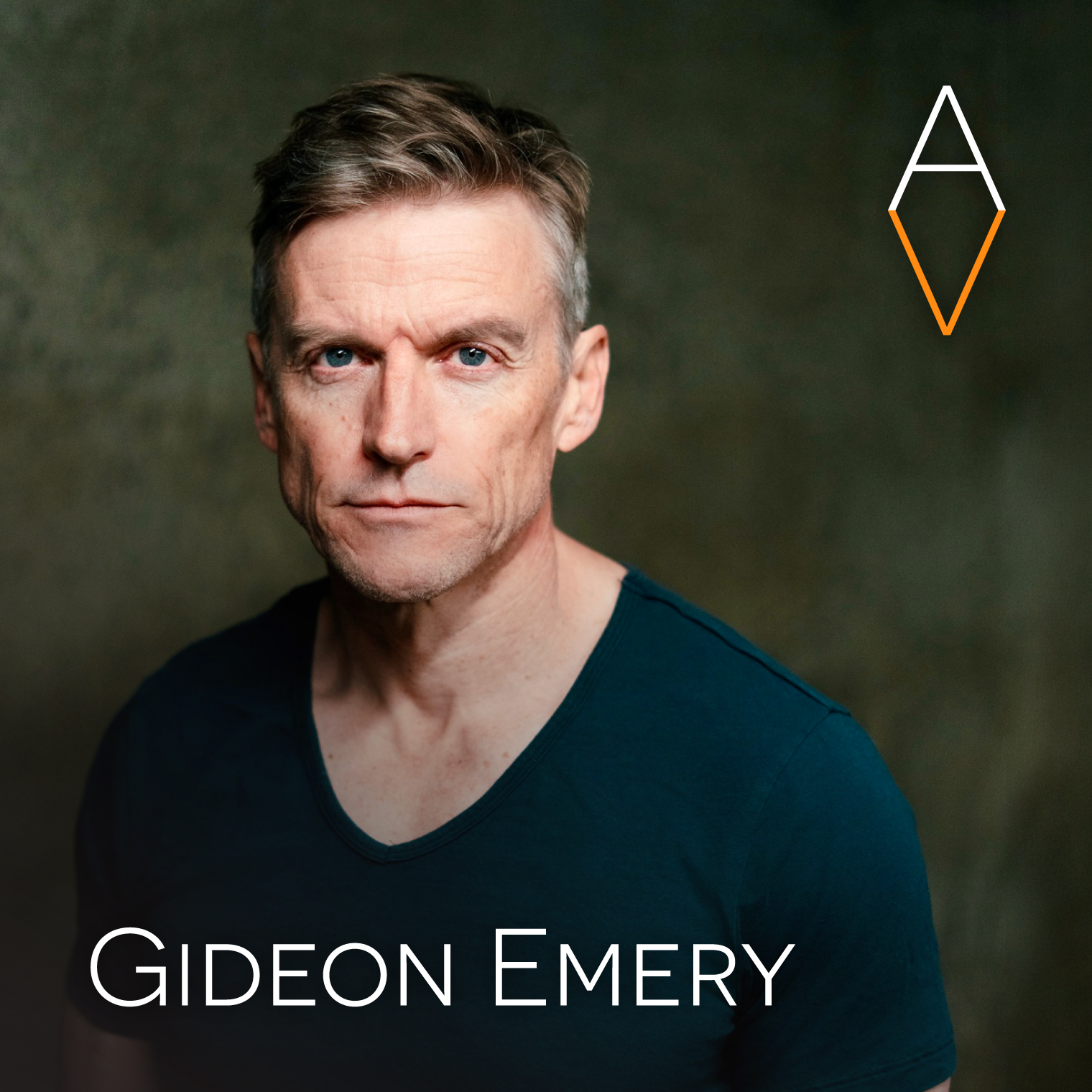
Learn how Gideon Emery (PCAP, VO, TV, Film, & Theatre Actor) has honed his craft through years of theater to decades voicing and performing in blockbuster video games. Learn how acceptance is the heart of his craft, why he finds PCAP to be the ultimate performance, and how he gave a droid (BD-1) it's soul through a nose flute.
Learn how Gideon Emery (PCAP, VO, TV, Film, & Theatre Actor) has honed his craft through years of theater to decades voicing and performing in blockbuster video games. Learn how acceptance is the heart of his craft, why he finds PCAP to be the ultimate performance, and how he gave a droid (BD-1) it's soul through a nose flute.

Laugh, cry, but mostly laugh as Zach Mendez (Voice & PCAP Actor) shares his journey from an elementary school teacher to acting in AAA Videogames. Hear how he "Finds His Fun" while performing and learn how his positive approach to his craft has led his career to some truly incredible opportunities.
Laugh, cry, but mostly laugh as Zach Mendez (Voice & PCAP Actor) shares his journey from an elementary school teacher to acting in AAA Videogames. Hear how he "Finds His Fun" while performing and learn how his positive approach to his craft has led his career to some truly incredible opportunities.

Hear Matthew Brezina's (Mocap AD & PCAP Producer) journey from a small-town upbringing to becoming involved in key projects within the world of performance capture, offering insights into the challenges, triumphs, and technical artistry of the video game industry.
Hear Matthew Brezina's (Mocap AD & PCAP Producer) journey from a small-town upbringing to becoming involved in key projects within the world of performance capture, offering insights into the challenges, triumphs, and technical artistry of the video game industry.

Hear how Richard Dorton (Mocap Actor & Director), known as the Mocap Man for his ability to bring any character to life, has lived his dream and played iconic roles from Darth Vader to Wolverine over the course of two decades working in the Mocap Industry.
Hear how Richard Dorton (Mocap Actor & Director), known as the Mocap Man for his ability to bring any character to life, has lived his dream and played iconic roles from Darth Vader to Wolverine over the course of two decades working in the Mocap Industry.

Jeff Berg (PCAP & VO Actor) shares his journey from theater to PCAP, reflecting on the importance of bringing his authentic self to every role. Learn how Jeff unifies cast and crew, creating incredible experiences on set and how his fatherhood has been a super power that has propelled his career.
Jeff Berg (PCAP & VO Actor) shares his journey from theater to PCAP, reflecting on the importance of bringing his authentic self to every role. Learn how Jeff unifies cast and crew, creating incredible experiences on set and how his fatherhood has been a super power that has propelled his career.

Hear how Emily Schweber's (Casting Director) unique career has spanned from printing T-shirts to casting for Titanic. Gain valuable insights into what actors need to know for auditions, including how to stand out, embrace adaptability, and make a lasting impression in both film and video game casting.
Hear how Emily Schweber's (Casting Director) unique career has spanned from printing T-shirts to casting for Titanic. Gain valuable insights into what actors need to know for auditions, including how to stand out, embrace adaptability, and make a lasting impression in both film and video game casting.

Hear Jee Young Han’s (PCAP, Film, TV Actor) unique journey from being a shy, quiet kid to building an acting career across multiple mediums. Discover how she transitioned her career from New York to LA, found a passion for Motion Capture, and continues to push the boundaries of her craft while staying true to herself.
Hear Jee Young Han’s (PCAP, Film, TV Actor) unique journey from being a shy, quiet kid to building an acting career across multiple mediums. Discover how she transitioned her career from New York to LA, found a passion for Motion Capture, and continues to push the boundaries of her craft while staying true to herself.


